
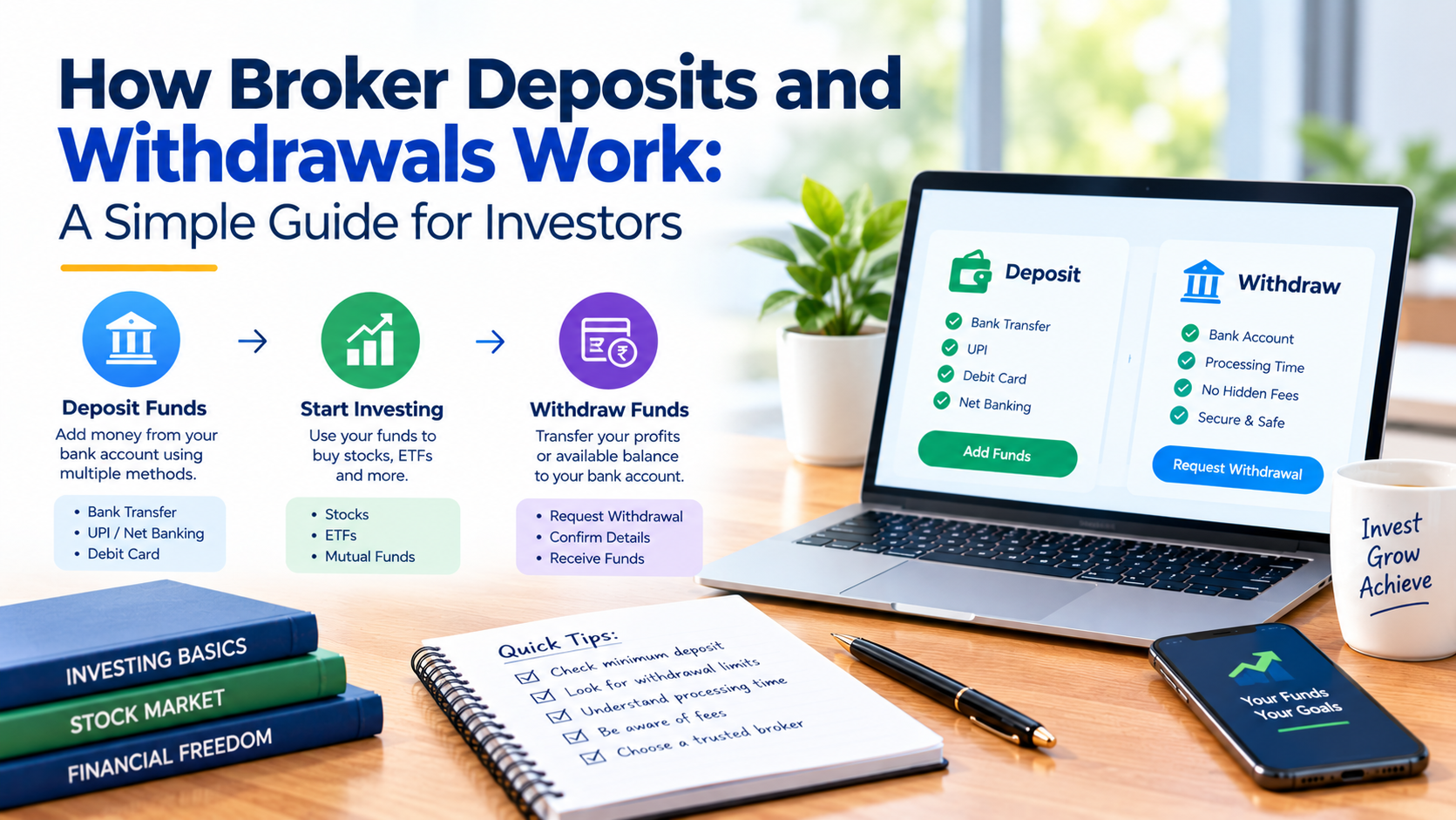
Depositing and withdrawing money from a brokerage account may seem as easy as moving money between two bank accounts. Usually, it is. However, the process can involve identity checks, transfer limits, processing times, currency conversion and security rules.
Understanding how broker deposits and withdrawals work can help you avoid delays and unexpected fees. This guide explains the process in simple language, with examples for investors in the USA, UK and Germany.
What Are Broker Deposits and Withdrawals?
A broker deposit is money you transfer into your investment account. You may use this money to buy stocks, ETFs, bonds, funds or other investments.
A broker withdrawal is money you move from your brokerage account back to your bank account.
The basic process is:
- You open and verify your brokerage account.
- You connect a bank account or another approved payment method.
- You send money to the broker.
- The broker adds the money to your cash balance.
- You use the money to buy investments.
- You sell investments when you want to raise cash.
- After the sale is completed, you request a withdrawal.
- The broker sends the available money to your verified bank account.
The exact steps vary between brokers and countries. A US broker may use ACH transfers or wire transfers. A UK investor may use a bank transfer in pounds. A German investor may use a euro bank transfer.
Opening and Verifying Your Account
Before you can deposit money, the broker usually needs to verify your identity.
The broker may ask for:
- Your full name.
- Date of birth.
- Home address.
- Phone number.
- Email address.
- Government-issued identification.
- Tax information.
- Employment details.
- Bank account information.
- Investment experience.
The US Securities and Exchange Commission explains that brokers commonly request personal and financial information when opening an account. This helps them meet legal and customer identification requirements.[investor]
A broker may also ask about your investment goals, financial situation and risk tolerance. This information helps the firm understand the type of account and services that may be suitable.
Account verification can be completed quickly, but it may take longer if the broker needs additional documents.
How to Deposit Money
Step 1: Choose a Payment Method
Common deposit methods include:
- Bank transfer.
- ACH transfer in the USA.
- Wire transfer.
- Debit card.
- Linked bank account.
- Electronic payment service.
- Transfer from another broker.
Not every broker accepts every method. Some brokers accept only bank transfers for investment accounts.
Bank transfers are often preferred because they are easier to track and may have lower fees than card payments.
Step 2: Add Your Bank Account
You may need to connect your personal bank account to your brokerage account.
The broker may ask you to:
- Enter your bank details.
- Confirm small test deposits.
- Log in securely through your bank.
- Upload a bank statement.
- Confirm that the account belongs to you.
Many brokers do not accept deposits from someone else’s bank account. This rule helps prevent fraud and money laundering.
Step 3: Send the Money
Once your bank account is connected, you can enter the amount you want to deposit.
Before confirming the transfer, check:
- The broker’s official bank details.
- Your account number or reference number.
- The payment currency.
- The expected arrival time.
- Any deposit limit.
- Any bank or broker fee.
Always use the deposit instructions shown inside the official broker account. Do not rely on bank details sent by an unknown email or message.
Step 4: Wait for the Money to Arrive
The time required depends on the payment method.
A domestic electronic transfer may arrive quickly. A bank wire may take longer, especially when it crosses borders. Deposits made by card may appear quickly but may have additional restrictions or fees.
The broker may show your deposit as:
- Pending.
- Processing.
- Available cash.
- Unsettled cash.
- Withdrawable cash.
These labels do not always mean the same thing. Money may appear in the account before it is available for withdrawal.
Deposits in the USA
US investors commonly use ACH transfers or wire transfers.
ACH Transfers
ACH transfers move money electronically between US bank accounts. They are often convenient and may be free, but they can take time to complete.
The broker may allow you to trade soon after receiving an ACH deposit. However, it may temporarily restrict withdrawals until the transfer has fully cleared.
Wire Transfers
Wire transfers may arrive faster than standard electronic transfers. However, banks may charge a wire fee.
Check whether the broker accepts domestic wires, international wires or both. Use the exact payment instructions provided by the broker.
Cash Management Programs
Some US brokers automatically move unused cash into a bank account or money market fund. The SEC explains that cash management programs can have different interest rates, risks and insurance arrangements.[investor]
For example, cash moved into a bank sweep program may receive different protection from cash kept within the brokerage account. Read the terms before selecting a cash management option.
Deposits in the UK
UK investors commonly use bank transfers in pounds. Some platforms also accept payments through debit cards or linked bank accounts.
Before sending money, check:
- Whether the broker accepts payments from your bank.
- Whether the payment must come from an account in your own name.
- Whether the account supports pounds.
- Whether international transfers are accepted.
- Whether deposits are free.
- How long the money takes to become available.
If you are depositing money into an ISA or pension account, check the account rules carefully. These accounts may have contribution limits and different withdrawal conditions.
Deposits in Germany
German investors often deposit euros through bank transfers.
Check whether the broker offers:
- A German or European bank account.
- Standard euro transfers.
- Instant transfer support.
- Deposit limits.
- Automatic investment payments.
- ETF savings plan funding.
A broker may provide separate payment details for regular deposits and savings plans. Enter the correct reference number so the payment reaches your account without delay.
Available Cash and Withdrawable Cash
One of the most important things to understand is the difference between cash shown in your account and cash you can withdraw.
Your account may show several balances:
- Total account value: The value of your cash and investments together.
- Available cash: Money that may be used to place a trade.
- Settled cash: Money that has completed the broker’s processing process.
- Withdrawable cash: Money you can send back to your bank account.
These amounts may be different.
For example, you deposit money on Monday. The broker may allow you to buy an investment immediately, but it may not allow you to withdraw that deposit until the transfer is fully completed.
Similarly, you may sell an investment and see the money in your account soon after the sale. The funds may still need to complete the settlement process before you can withdraw them.
The US SEC explains that cash account investors must understand when funds are settled and available. Certain trading mistakes can lead to restrictions on the account.[sec]
How Selling Investments Affects Withdrawals
When you sell an investment, the money does not always become withdrawable immediately.
The broker first needs to complete the sale. The transaction may then require a settlement period before the money becomes fully available.
The waiting period can depend on:
- The market.
- The investment type.
- The country.
- The broker.
- Whether the trade involves stocks, funds, bonds or options.
For this reason, investors should check the broker’s settlement information before requesting a withdrawal.
If you request money too soon, the broker may:
- Reject the request.
- Keep it pending.
- Cancel the request.
- Ask you to wait until the cash is settled.
How to Withdraw Money
Step 1: Sell Investments if Necessary
If your account contains only investments and no available cash, you may need to sell something first.
Remember that selling an investment may create:
- A brokerage charge.
- A tax consequence.
- A currency conversion cost.
- A loss if the market price has fallen.
You do not need to sell investments if you already have enough withdrawable cash.
Step 2: Choose the Bank Account
Most brokers send withdrawals only to a verified bank account in your name.
This rule may prevent the broker from sending money to an unknown third party. It also helps reduce fraud.
If you recently deposited money through a bank account, the broker may require the withdrawal to return to that same account.
Step 3: Enter the Withdrawal Amount
Enter the amount you want to withdraw. Before confirming, check:
- The available withdrawal balance.
- The withdrawal fee.
- The payment currency.
- The expected arrival time.
- Any daily or monthly limit.
- Whether a minimum balance must remain.
Do not request more than the withdrawable amount.
Step 4: Complete Any Security Check
The broker may ask you to confirm the withdrawal through:
- A text message.
- An authentication app.
- Email confirmation.
- A security code.
- A phone call.
- Identity documents.
These checks protect your account. Do not share security codes with another person, even if they claim to work for the broker.
Step 5: Wait for the Transfer
A withdrawal may take longer than a deposit. The broker may first review the request, then send the money through the banking system.
International withdrawals may take additional time because of currency conversion and cross-border processing.
Withdrawal Fees and Limits
Some brokers offer free withdrawals. Others charge a fee, especially for:
- International wires.
- Urgent payments.
- Additional withdrawals.
- Withdrawals in another currency.
- Payments through certain methods.
A broker may also set a minimum withdrawal amount or a daily limit.
Before opening an account, read the withdrawal policy. A platform may appear cheap at the beginning but become expensive when you move money out.
Currency Conversion and International Withdrawals
Currency costs matter when the brokerage account and bank account use different currencies.
For example:
- A US investor withdraws euros to a dollar bank account.
- A UK investor withdraws dollars to a pound account.
- A German investor withdraws pounds to a euro account.
The broker may convert the money automatically. The exchange rate may include a markup or conversion fee.
Ask the broker:
- Which exchange rate it uses.
- Whether it charges a separate conversion fee.
- Which currencies it supports.
- Whether you can hold more than one currency.
- Whether the receiving bank may charge an additional fee.
Receiving money in the same currency as your bank account can help avoid unnecessary conversion costs.
Why a Withdrawal May Be Delayed
A withdrawal may be delayed for several legitimate reasons.
The Deposit Has Not Cleared
If you recently deposited money, the broker may wait until the payment has fully cleared before allowing a withdrawal.
The Investment Sale Has Not Settled
Money from a recent sale may need to complete the settlement process.
Your Identity Verification Is Incomplete
The broker may hold a withdrawal if it needs additional identity or tax documents.
Your Bank Details Have Changed
A new bank account may require extra verification. This can take longer than sending money to an account you have used before.
The Withdrawal Amount Is Too Large
A large withdrawal may trigger a security review. This does not necessarily mean something is wrong.
A Bank Holiday or Weekend Is Involved
Bank transfers may take longer around weekends and public holidays. Cross-border payments may also need more processing time.
The Account Has a Restriction
A broker may restrict withdrawals if it identifies unusual activity, an unpaid balance or a possible security problem.
Contact the broker through its official support channels if the delay is not explained.
Important Security Rules
Your broker should protect deposits and withdrawals with strong security measures.
Look for:
- Two-factor authentication.
- Withdrawal notifications.
- Login alerts.
- Device verification.
- Secure payment instructions.
- Clear account statements.
- A process for reporting unauthorised transactions.
The SEC advises investors to protect online brokerage accounts with strong passwords, secure devices and extra security measures. It also recommends checking account statements regularly and reporting unauthorised activity immediately.[sec]
Do not:
- Share your password.
- Share a verification code.
- Allow strangers to control your computer.
- Click unknown payment links.
- Send money to a personal bank account.
- Ignore an unexpected withdrawal notification.
How to Identify Deposit and Withdrawal Scams
Fraudulent trading platforms often make deposits look easy and withdrawals difficult.
BaFin warns that scam platforms may show fake profits and later demand extra payments before releasing money. Fraudsters may describe these payments as taxes, insurance, verification charges or withdrawal fees.[bafin]
A legitimate broker should not pressure you to send extra money to unlock a fake balance.
Be cautious if someone:
- Contacts you unexpectedly.
- Promises guaranteed profits.
- Pressures you to deposit quickly.
- Asks you to send money to another person.
- Requests remote access to your computer.
- Demands a payment before processing a withdrawal.
- Claims to work for a regulator.
- Says your account will be frozen unless you pay immediately.
BaFin also warns that legitimate authorities do not ask private investors to transfer money for account verification or investment recovery.[bafin]
How to Protect Your Money
Follow these simple steps:
- Use only the broker’s official website or app.
- Confirm the web address before logging in.
- Send money only to the company bank account shown in your official account.
- Make sure the bank account name matches the broker.
- Keep copies of deposit and withdrawal confirmations.
- Turn on two-factor authentication.
- Check your statements regularly.
- Report suspicious transactions immediately.
- Do not allow unknown people remote access to your device.
- Verify the broker with the relevant regulator.
The SEC says investors should direct deposits and transfers to the authorised broker or its approved clearing firm, rather than to an individual representative.[investor]
What Happens if a Broker Fails?
Investor protection depends on the country, broker and type of money involved.
In the USA, Securities Investor Protection Corporation protection may apply when a member brokerage firm fails. SIPC protection is designed to help return eligible securities and cash, subject to limits. It does not protect you from losing money because an investment falls in value.[investor]
Cash held in a bank sweep programme may be covered under bank deposit insurance rules instead of SIPC rules. The exact protection depends on how the broker holds the money.[investor]
In the UK and Germany, different compensation and investor protection arrangements may apply. Check the broker’s legal entity and the relevant local scheme before opening an account.
Protection rules do not guarantee investment profits. They also do not usually protect against normal market losses.
A Simple Deposit and Withdrawal Example
Imagine that a UK investor deposits £1,000 into an online brokerage account.
- The broker receives the deposit.
- The investor buys shares worth £800.
- The remaining £200 stays as cash.
- The investor later sells the shares for £850.
- The account now shows £1,050 before fees and taxes.
- The investor waits until the sale money becomes settled.
- The investor requests a withdrawal of £1,050.
- The broker sends the money to the verified UK bank account.
If the investor buys a US share instead, currency conversion charges may reduce the final amount. If the investor sells the share at a loss, the withdrawal amount may also be lower.
Questions to Ask Your Broker
Before depositing money, ask:
- Which deposit methods are available?
- How long do deposits usually take?
- Can I deposit in my local currency?
- Are deposits free?
- Are there minimum or maximum deposit limits?
- How long must I wait before withdrawing a new deposit?
- How long does it take to withdraw money after selling an investment?
- Are withdrawals free?
- Are international withdrawal fees charged?
- Can I withdraw to more than one bank account?
- Does the broker support multiple currencies?
- What happens if my bank details change?
- Which investor protection scheme applies?
- Who should I contact if a withdrawal is delayed?
Clear answers to these questions can help you avoid surprises.
Frequently Asked Questions
How long does a broker deposit take?
The time depends on the payment method, broker and country. Electronic bank transfers may be quick, while international wires may take longer.
The money may also be subject to a holding period before it can be withdrawn.
Can I withdraw money immediately after depositing it?
Not always. A broker may allow you to invest soon after receiving a deposit but may delay withdrawals until the payment has fully cleared.
Can I withdraw money immediately after selling shares?
Usually, you may need to wait until the sale is completed and the money has settled. The waiting period depends on the market, investment and broker.
Why does a broker need my bank account details?
The broker uses your bank details to send and receive money securely. It may also require the bank account to be in your name to prevent fraud.
Can a broker refuse a withdrawal?
A broker may delay or reject a withdrawal because of unsettled funds, incomplete verification, unpaid charges, incorrect bank details or account restrictions.
If the reason is unclear, contact the broker through its official support channels.
Are broker deposits protected?
Protection depends on the country, broker and type of account. Review the broker’s legal documents and understand whether protection applies to cash, investments or both.
What should I do if someone asks for money before releasing my withdrawal?
Do not send more money without verifying the request directly with the broker. Requests for extra taxes, insurance payments or “unlocking fees” can be signs of fraud. Contact your bank and the relevant regulator if you suspect a scam.
Final Takeaway
Depositing money into a brokerage account usually involves linking a verified bank account, sending funds through an approved payment method and waiting for the broker to process the transfer. Withdrawals usually require available and settled cash, a verified bank account and an additional security check.
The timing and cost depend on your broker, country, currency and payment method. US investors may use ACH transfers or wires. UK investors may use pound bank transfers. German investors may use euro transfers and regular savings plan payments.
Always check the broker’s deposit and withdrawal policy before transferring money. Use strong account security, review your statements and be cautious about anyone who demands extra money before releasing a withdrawal.
A reliable broker should explain its payment process clearly. If deposits are easy but withdrawals are confusing, delayed without a clear reason or linked to pressure for additional payments, treat the situation as a serious warning sign.
This article is for educational purposes only. It is not financial, tax or legal advice. Deposit rules, processing times, fees and investor protection arrangements may change. Always check the latest information with your broker and the relevant regulator.