
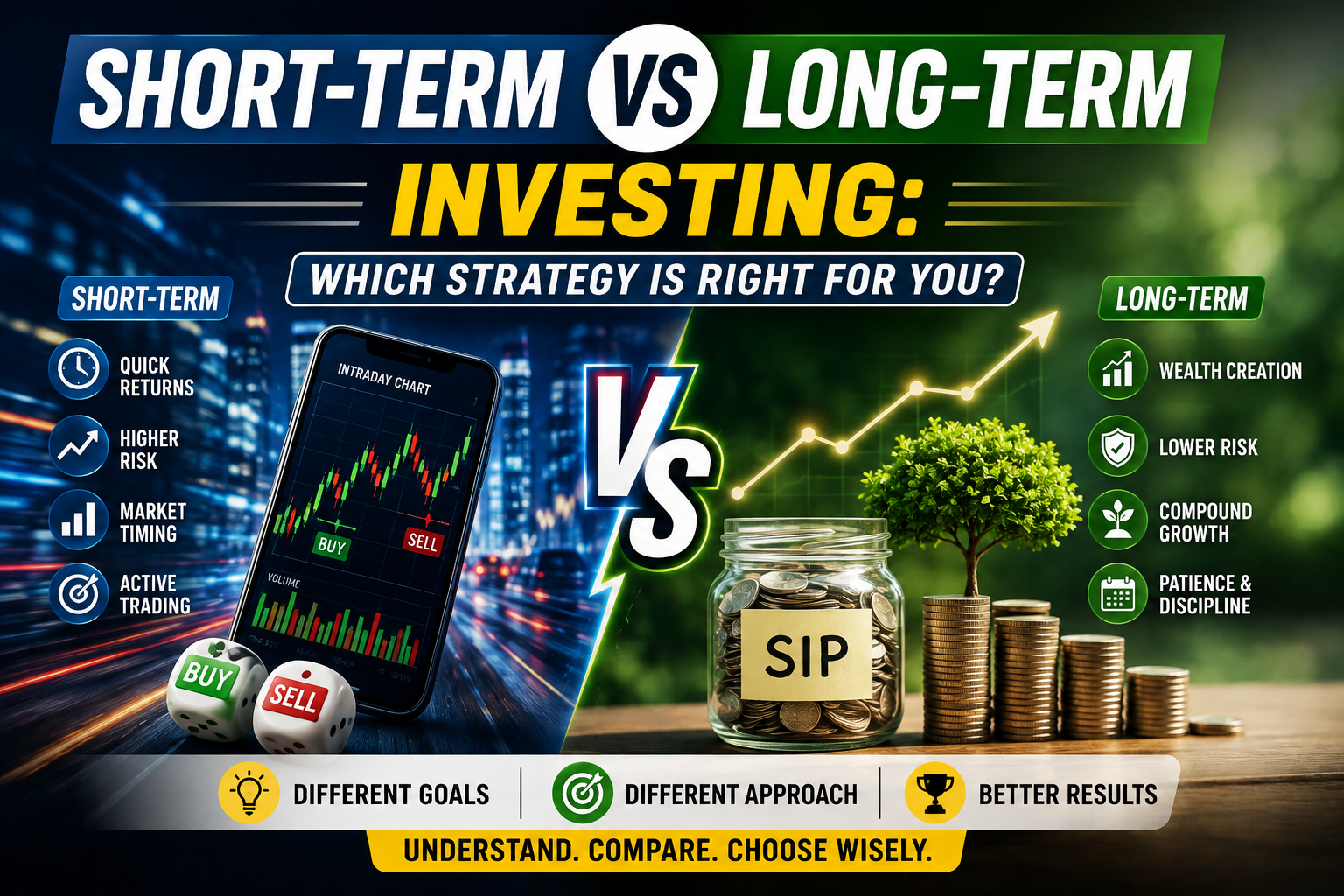
Ask ten investors how they build wealth and you may get ten different answers. Some check prices every morning and trade a few times a week. Others buy once a month and barely look at their account for years. Both groups call themselves investors, yet they follow very different paths.
This is the heart of the short-term vs long-term investing debate. Neither approach is automatically better. The right choice depends on your goals, your timeline, and how well you handle stress when markets move. In this guide, you will learn what each strategy means, how they compare, and how to decide which one fits your life.
What Is Short-Term Investing?
Short-term investing usually means holding an investment for less than three years. Some people stretch the definition to five years, and some day traders hold positions for just a few hours. The goal is to either profit from quick price movements or keep money safe and accessible for a near-term need.
There are two very different types of short-term investors. The first is the saver with a specific goal, like a wedding in 18 months or a house down payment in two years. They want their money to be there, intact, when the date arrives. The second is the active trader who tries to catch price swings and earn fast profits. These two groups use completely different tools and take very different levels of risk.
Common Short-Term Investment Options
If your goal is to protect money you will need soon, these options are popular:
- High-yield savings accounts
- Certificates of deposit (CDs) or fixed deposits
- Short-term government bonds and treasury bills
- Money market funds
These choices offer stability and easy access, though returns are modest. If your goal is active trading, you might use individual stocks, options, or currency markets. These can produce quick gains, but they also produce quick losses.
What Is Long-Term Investing?
Long-term investing means holding investments for five years, ten years, or even several decades. The idea is to buy quality assets and let them grow while you ignore the daily noise. Retirement savings, a child’s education fund, and building general wealth are classic long-term goals.
Long-term investors accept that markets will fall sometimes. They stay invested anyway, because history suggests that diversified markets have tended to recover and grow over long stretches. Patience is the main skill here, more than intelligence or timing.
Common Long-Term Investment Options
- Low-cost index funds and ETFs
- Diversified mutual funds
- Retirement accounts such as a 401(k), IRA, ISA, or pension
- Dividend-paying stocks
- Long-term bonds
- Real estate or real estate investment trusts (REITs)
Short-Term vs Long-Term Investing: Key Differences
Let’s compare the two strategies across the factors that matter most.
Time Horizon
This is the biggest difference. Short-term investors work with a window of days to a few years. Long-term investors think in decades. Your time horizon should shape every other decision you make, from which assets you choose to how much risk you accept.
Risk Level
Short-term trading is often riskier than people expect. Prices can swing wildly in a few days, and you may not have time to recover from a loss. Long-term investing gives you time to ride out the bad stretches. A stock market drop of 30% is painful, but if you do not need the money for 20 years, you have room to wait.
Keep in mind that “short-term” saving in cash or CDs is low risk, while short-term trading is high risk. The word short-term alone does not tell you how safe something is.
Returns
Short-term trades can produce fast gains, but consistency is hard. Studies of retail traders have repeatedly found that most lose money over time, especially after fees. Long-term investing in diversified assets has historically produced steadier growth, helped by compounding. The longer your money stays invested, the more it can build on itself.
Costs and Taxes
Frequent trading means more transaction costs and, in many countries, higher taxes. In places like the United States, gains on assets held for under a year are often taxed at your regular income rate. Assets held longer than a year may qualify for lower long-term capital gains rates. Tax rules vary widely by country, so check your local laws before you decide.
Time and Effort
Short-term trading takes real time. You need to watch markets, read news, and make quick decisions. Long-term investing can be almost hands-off. You set up automatic contributions, review things once or twice a year, and let the plan run.
Emotional Pressure
Watching your money rise and fall every hour is exhausting. Active traders often make decisions driven by fear or excitement. Long-term investors face emotions too, but they have fewer decisions to make, which keeps those emotions from causing as much damage.
A Real-Life Example
Meet two friends, Daniel and Priya. Both have $10,000 to invest.
Daniel decides to trade actively. He buys and sells stocks based on news headlines and online tips. He wins a few trades, loses a few more, and pays fees on every move. After two years, he is down about 8% and feels drained from constantly checking his phone.
Priya puts her $10,000 into a diversified index fund and adds $200 a month. She does not touch it. During the same two years, the market has a rough patch and she sees her balance dip. She stays calm and keeps contributing. After two years her account is up modestly, and she has spent almost no time worrying about it.
This is only one example, and some active traders do succeed. But it shows why the long-term, steady approach tends to work better for ordinary people with busy lives.
How to Choose Between Short-Term and Long-Term Investing
You do not have to pick only one. Most financially healthy people use both, matched to different goals. Here is a simple way to decide.
Start With Your Goal
Ask when you will need the money. If the answer is within three years, lean toward safe, short-term options. If the answer is ten years or more, long-term investments make more sense. Matching each goal to the right timeline is the single most important step.
Check Your Risk Tolerance
Be honest about how you would feel if your investments dropped 20% next month. If that would make you lose sleep or sell in a panic, avoid aggressive short-term bets. A calmer, diversified long-term plan may suit you better.
Consider Your Time and Knowledge
Active trading is nearly a part-time job. If you have a full schedule and are still learning, a long-term approach asks far less of you. You can always learn more and adjust later.
Think About Your Financial Situation
Before taking any risk, make sure you have an emergency fund and no high-interest debt. Without those, even a good investment plan can collapse when life throws a surprise.
A Simple Way to Combine Both Strategies
Many people use what is sometimes called a bucket approach. You divide your money into groups based on when you will need it.
- Bucket 1 (0 to 2 years): Emergency fund and near-term goals in savings, CDs, or money market funds.
- Bucket 2 (3 to 7 years): A mix of bonds and conservative funds for mid-range goals.
- Bucket 3 (8+ years): Mostly stock index funds and ETFs for retirement and long-term wealth.
This setup protects the money you need soon while giving the rest room to grow. It also means a market crash does not force you to sell your long-term investments to cover a short-term bill.
Common Mistakes to Avoid
Using Short-Term Money for Long-Term Risks
Putting next year’s tuition money into a volatile stock is a classic error. If the market drops right before you need the cash, you have no time to recover. Keep near-term money in safe places.
Treating Long-Term Money Like a Trading Account
Checking your retirement fund daily and reacting to every headline can lead to bad decisions. Selling during a downturn and buying back after prices recover often locks in losses.
Trying to Time the Market
Even professionals struggle to predict highs and lows. Missing just a handful of the market’s best days can noticeably reduce your long-term returns. Regular investing through dollar-cost averaging is a calmer alternative.
Ignoring Fees and Taxes
Costs reduce your returns every year, and frequent trading increases them. Always look at what you keep after fees and taxes, not just the headline return.
Quick Tips for Success
- Match every goal to a time frame before you invest.
- Keep three to six months of expenses in an emergency fund.
- Automate your long-term contributions so you do not rely on willpower.
- Limit speculative trading to a small slice of your money, perhaps 5% to 10%.
- Review your plan once or twice a year and adjust as life changes.
Frequently Asked Questions
Is long-term investing better than short-term investing?
For most beginners, long-term investing is simpler, cheaper, and more reliable. Short-term investing still has a place when you need money within a few years and want to keep it safe.
How long is considered long-term investing?
Generally, five years or more counts as long-term, though many experts think of ten years or longer. The longer the horizon, the more time your investments have to recover from downturns.
Can I do both short-term and long-term investing?
Yes. Many people keep part of their money in safe short-term options for upcoming goals and invest the rest for the long run. This balance is often the most practical approach.
Is day trading a good idea for beginners?
It is usually not recommended. Day trading is risky, time-consuming, and statistically difficult to profit from. Beginners are typically better off starting with diversified, long-term investments.
Final Thoughts
The short-term vs long-term investing question is really a question about time and purpose. Money you need soon should stay safe and accessible. Money you will not touch for years can be invested for growth and allowed to compound.
For most people, the winning formula is simple. Build an emergency fund, protect your short-term goals, and invest steadily for the long term in low-cost, diversified funds. It may not feel exciting, but boring is often what builds wealth.
Take one small step today. Write down your three biggest financial goals, put a timeline next to each, and decide which bucket they belong in. That simple exercise will make every future investing decision clearer.
Disclaimer: This article is for general educational purposes only and is not personalized financial advice. Examples are illustrative and not guaranteed. All investments carry risk, including the loss of money. Tax rules vary by country, so consider speaking with a licensed financial advisor before making decisions.