
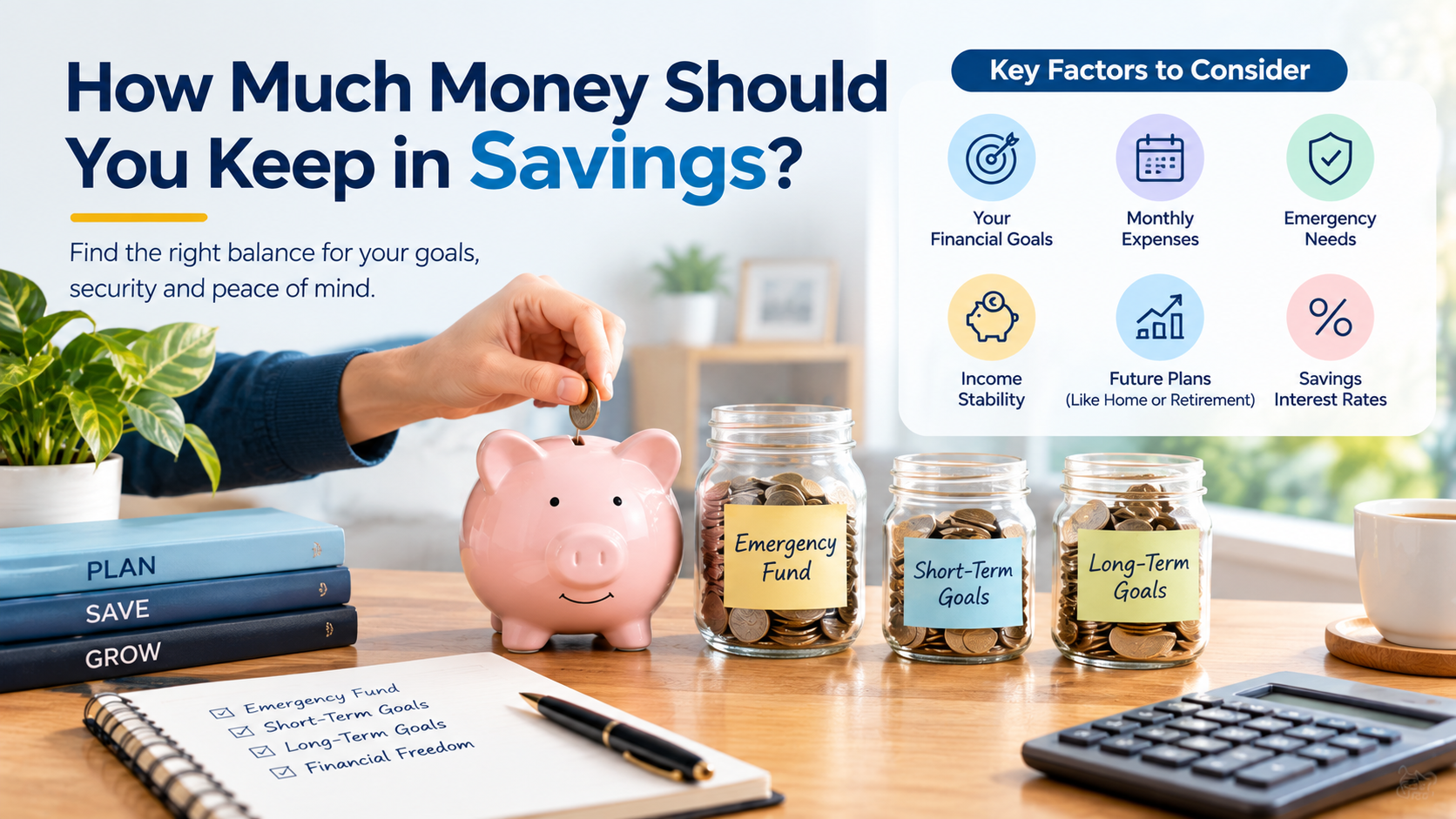
Somewhere along the way, “how much should I have in savings?” became one of those questions that quietly stresses people out. You scroll through a finance post, see someone casually mention six months of expenses sitting in a bank account, and immediately start doing panicked math about your own bank balance. If that sounds familiar, take a breath. There is no single magic number that applies to everyone, and honestly, anyone who tells you otherwise is probably selling you something.
What actually matters is understanding why savings exist, what role they play in your life, and how to figure out a number that fits your own circumstances instead of someone else’s Instagram post. Let’s get into it properly.
Why This Question Doesn’t Have One Answer
Think about two people. One is a salaried government employee with job security, no dependents, and a company that covers most medical costs. The other is a freelance graphic designer with irregular income, two kids, and a mortgage. Asking both of them to aim for the same savings number is a bit like telling a marathon runner and a weightlifter to train identically because they’re both “into fitness.” The goal might be loosely similar, but the path there looks completely different.
Your ideal savings amount depends on your job stability, your monthly expenses, how many people depend on your income, your health situation, and honestly, how much financial anxiety you personally carry. Someone who sleeps better with a bigger cushion isn’t being irrational, they just know themselves.
The Starting Point: An Emergency Fund
Before anyone talks about investing, saving for a house, or building long-term wealth, there’s one layer that comes first: the emergency fund. This is money that exists purely to catch you when something unexpected happens, a job loss, a medical bill, a car that suddenly needs a new engine, or a family emergency that requires you to drop everything and travel.
The commonly cited rule is to keep three to six months of essential living expenses in an easily accessible account. Essential expenses here means rent or EMI, groceries, utilities, insurance premiums, and any other non-negotiable monthly cost, not your Netflix subscription or your weekend dining budget. If your monthly essentials add up to 40,000 rupees, you’re looking at somewhere between 1.2 lakh and 2.4 lakh as a reasonable emergency fund target.
Now, that range exists for a reason, and where you land within it depends on your situation. If you’re in a stable, in-demand job with a partner who also earns, three months might genuinely be enough. If you’re self-employed, work in an industry prone to layoffs, or you’re the sole earner for your household, leaning closer to six months, or even a bit beyond, makes a lot more sense.
Beyond the Emergency Fund: What Else Counts as “Savings”
Here’s where things get a little more layered, because savings isn’t really one bucket, it’s several buckets with different jobs.
There’s your emergency fund, which we just covered, sitting somewhere safe and liquid like a savings account or a liquid mutual fund. Then there’s short-term savings, money you’re setting aside for something specific in the next one to three years, maybe a wedding, a big trip, or a down payment on a bike or car. This money shouldn’t be locked away in anything risky or illiquid, since you’ll need it relatively soon.
Then there’s the long game, which includes retirement savings and wealth-building investments. This is money that isn’t really “savings” in the traditional sense anymore, it’s working for you in things like mutual funds, PPF, NPS, or other investment vehicles designed to grow over decades rather than sit idle.
A lot of the confusion around “how much should I save” comes from mixing these buckets together. Someone might feel like they have a healthy amount saved because their total net worth looks fine on paper, while their actual accessible emergency cushion is dangerously thin. Separating these mentally, and ideally physically into different accounts, makes everything clearer.
A Simple Way to Think About Your Savings Ratio
If you want a rough framework rather than a fixed rupee figure, think in percentages instead. A commonly used guideline is some version of the 50-30-20 approach: roughly 50% of your income toward needs, 30% toward wants, and 20% toward savings and debt repayment. It’s not a rigid law, more of a sanity check you can bend based on your reality.
If you’re early in your career and living with family, saving 30 to 40% might be completely realistic. If you’re paying off a home loan with a new baby in the picture, even managing a steady 10 to 15% consistently is a solid outcome, and you shouldn’t feel behind just because a blog post somewhere suggested 20% as the baseline. Consistency beats intensity here. Saving a modest amount every single month, without fail, tends to build a bigger cushion over time than sporadic large deposits followed by months of saving nothing at all.
Signs You’re Not Saving Enough
Sometimes the number on paper looks fine, but your gut tells you something’s off. A few signals worth paying attention to: you’d need to borrow money or use a credit card if your car broke down tomorrow, a single missed paycheck would genuinely scare you, you’ve been putting off a necessary medical checkup because of the cost, or you find yourself avoiding your bank statement altogether because looking at it makes you anxious.
None of these mean you’ve failed at managing money. They’re just honest signs that your current cushion isn’t matching the pace of life you’re living, and that’s useful information, not a reason to spiral.
Signs You Might Be Over-Saving
This one surprises people, but yes, it’s possible to tip too far the other way. If you have well over a year of expenses sitting in a low-interest savings account while carrying high-interest debt elsewhere, or while completely avoiding any form of investing out of fear, that caution might be quietly costing you. Money sitting idle loses value to inflation over time, so once your emergency fund and near-term goals are covered, letting the rest sit there indefinitely isn’t really “safe,” it’s just a different kind of risk.
The goal isn’t to hoard cash forever. It’s to build enough of a buffer that you can take calculated risks elsewhere, whether that’s investing, starting a side business, or simply not losing sleep over a surprise expense.
How to Actually Build Up Your Savings Without Burning Out
Knowing the target number is one thing, actually getting there is where most people struggle. A few things genuinely help. Automate a fixed transfer to a separate savings account right when your salary comes in, so saving happens before spending has a chance to eat into it. Keep your emergency fund in a separate account from your daily spending account, ideally one that’s mildly inconvenient to access, so you’re not tempted to dip into it for a sale on shoes. Start smaller than you think you need to. Even saving 2,000 or 5,000 rupees a month consistently builds momentum and a habit, which matters more early on than the actual amount. And revisit your number every six months or so, because your expenses, income, and life situation will keep shifting, and your savings target should shift along with it.
What About Savings Account Interest While You Build This Up?
Since your emergency fund needs to stay liquid, it’s worth putting some thought into where it actually sits rather than just leaving it in whatever account your salary lands in. Many banks, especially newer digital-first ones, offer noticeably better interest rates on savings balances than older traditional accounts, sometimes with no real trade-off in accessibility. It won’t transform your financial life, but earning a bit more on money you’re keeping idle anyway is one of those small, practically free wins worth taking.
So, What’s the Real Answer?
If you want one grounded takeaway from all of this: aim for three to six months of essential expenses in an accessible emergency fund first, lean toward the higher end if your income is unpredictable or you’re the main earner in your household, and treat everything beyond that as a separate conversation about short-term goals and long-term investing. Don’t borrow someone else’s number and panic that you’re behind. Build toward your own, at your own pace, and adjust as life changes around you.
Money stress rarely comes from the actual size of your bank balance, it comes from not having a plan that matches your reality. Once you know your number and you’re steadily working toward it, that stress tends to quiet down a lot faster than you’d expect.
Frequently Asked Questions
Is three months of savings really enough?
For some people, yes, especially those with stable jobs and strong family or partner support. For freelancers, single-income households, or anyone in an uncertain job market, six months or more is the safer target.
Should I pay off debt or build savings first?
A small starter emergency fund, even just one month of expenses, is worth building before aggressively paying off debt, so you’re not forced to rely on credit cards during an unexpected expense. After that, high-interest debt usually deserves priority over growing your savings further.
Where should I keep my emergency fund?
Somewhere safe and easy to access, like a savings account or a liquid fund, not in the stock market or anything that could lose value right when you need the money most.
How often should I reassess how much I’m saving?
Roughly every six months, or any time something major changes, a new job, a new dependent, a big move, or a significant change in your income or expenses.
Is it bad to have too much money sitting in savings?
Not bad exactly, but once your emergency fund and short-term goals are covered, keeping everything beyond that idle in a low-interest account means it’s slowly losing value to inflation instead of growing for you.