
Your first job. Your first car. Your first home loan. Somewhere along the way, someone tells you, “You should get insurance.” And suddenly you are surrounded by words like premium, sum insured, rider, deductible and nominee.
It is easy to feel lost. Many beginners either buy the first plan they hear about or put it off for years. Both choices can be costly. The first can leave you with the wrong cover, and the second can leave you with no cover at all.
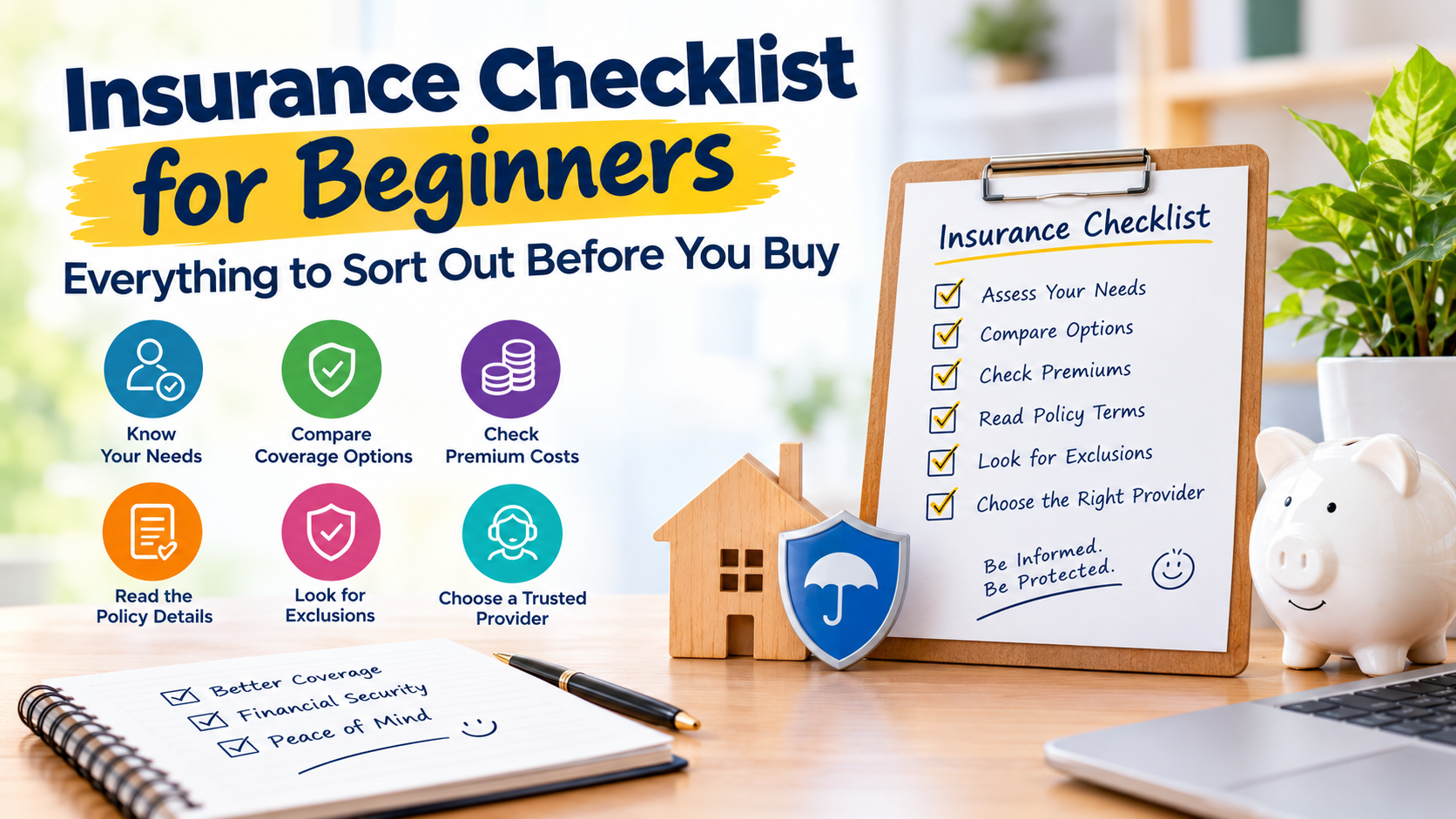
This insurance checklist for beginners is here to make things simple. We will walk through what to understand first, which policies matter most, what to check before paying and how to keep everything in order afterwards. You can even use it as a one-page guide when you sit down to buy.
Part 1: Understand the Basics First
Before you tick any boxes, make sure you know the core terms. They are not as scary as they sound.
- Premium: The amount you pay for the policy, monthly or yearly.
- Sum insured or sum assured: The maximum amount the insurer will pay. In life insurance, it is called the sum assured.
- Policy term: The period for which the policy is active.
- Nominee: The person who receives the benefit if something happens to you.
- Claim: A request to the insurer to pay for a covered loss.
- Deductible: The portion of a claim you pay before the insurer pays the rest.
- Exclusions: Situations the policy does not cover.
- Waiting period: The time you must wait before some benefits begin.
- Rider: An optional add-on that gives extra protection.
Knowing these words makes every policy document easier to read. Keep this list handy when you compare plans.
Part 2: Decide What You Really Need
You do not need every type of insurance on day one. Here is a simple order of priority for most beginners.
Health Insurance
This is usually the first cover to buy. Medical costs are rising, and one hospital stay can eat into years of savings. Even if your employer gives you a basic plan, it often ends when you change jobs, so a personal policy is a smart backup.
Term Life Insurance
If anyone depends on your income, such as a spouse, children or parents, term insurance protects them if you are not around. If nobody depends on you yet, you can wait a little, but buying early locks in a lower premium for the long run.
Motor Insurance
If you own a car or two-wheeler, third-party insurance is a legal requirement. Comprehensive cover also protects your own vehicle from damage and theft.
Personal Accident and Critical Illness Cover
These are useful add-ons once your basics are in place. They give a fixed payout in case of accidents or serious illness.
Travel Insurance
Buy this when you travel, especially abroad, to cover medical emergencies, lost baggage and trip cancellations.
Home Insurance
If you own a house, this protects against fire, floods, theft and other risks. Renters can consider contents cover for valuable items.
Checklist for this part:
- [ ] I have listed who depends on me financially.
- [ ] I know my biggest financial risks.
- [ ] I have chosen my top two or three priorities.
Part 3: Work Out How Much Cover You Need
A policy with too little cover leaves a gap. A policy with too much may strain your budget. Let us look at a simple way to estimate for each type.
Life Insurance
A common thumb rule is 10 to 15 times your annual income. For a more careful figure, add up your loans, your family’s yearly expenses for the number of years they will need support and future goals like your child’s education. Then subtract your existing savings and other cover.
Health Insurance
Think about hospital costs in your city, your age, your family’s health history and the number of people to cover. A solid base policy plus a top-up plan is often a smart combination, since it gives higher protection at a lower cost.
Motor Insurance
Choose an insured value based on the current market value of your vehicle, not the price you paid years ago.
Checklist for this part:
- [ ] I have a rough number for my life cover.
- [ ] I have decided on a health cover amount that fits my city and family.
- [ ] I know my vehicle’s current value.
Part 4: Compare Plans Before You Pay
Never buy the first quote you see. Compare at least three plans for the same cover amount and term.
Look at these points:
- Premium: Is it fixed or does it change?
- Benefits: What exactly is included?
- Exclusions: What is left out?
- Waiting periods: How long before cover starts for pre-existing conditions or specific treatments?
- Sub-limits and co-payment: Are there caps on room rent or treatments, or a share of the bill you must pay?
- Riders: Which add-ons are available, and which do you truly need?
- Renewal terms: Is lifelong renewability offered for health plans?
Checklist for this part:
- [ ] I have collected at least three quotes.
- [ ] I have compared them on benefits, not only on price.
- [ ] I have noted the exclusions and waiting periods of each plan.
Part 5: Check the Insurer
A good plan is only as good as the company behind it. Spend a few minutes on research.
- Claim settlement ratio: The share of claims that the insurer settled. Check the record over several years.
- Solvency ratio: A measure of the insurer’s ability to pay claims.
- Network hospitals or garages: Make sure there are good options near you for cashless service.
- Customer service and reviews: See how the company treats customers in real life.
- Claim process: Find out whether claims can be filed online and how long they usually take.
Checklist for this part:
- [ ] I have checked the insurer’s claim settlement record.
- [ ] I have confirmed that the network includes places near me.
- [ ] I have read recent customer reviews.
Part 6: Fill in the Proposal Form Honestly
This part decides whether your claim will be accepted later. Provide accurate and complete information about your age, health, habits, income, occupation and any existing policies.
Do not hide a pre-existing condition or a habit like smoking just to get a lower premium. If an insurer discovers it at the time of a claim, it can reject the claim, and the savings you made will look tiny compared with the loss.
Checklist for this part:
- [ ] I have answered every question truthfully.
- [ ] I have disclosed my health history and existing policies.
- [ ] I have checked that my name, date of birth and ID details match my documents.
Part 7: Set Up Your Nominee and Documents
Once you buy the policy, your work is not over. Take care of these small but important details.
Choose Your Nominee Carefully
Name someone you trust, spell their name correctly and mention their relationship. If you name a minor, also name an appointee who can manage the money until the child grows up. Update the nominee after marriage, divorce or the birth of a child.
Keep Your Documents Safe
Store the policy document, receipts and the insurer’s helpline number in a secure place. Keep a digital copy in your email or cloud storage and a printed copy at home.
Inform Your Family
Make sure at least one family member knows about your policies, where the papers are kept and how to contact the insurer. A policy that nobody knows about may never be claimed.
Checklist for this part:
- [ ] I have named a nominee, and the details are correct.
- [ ] I have saved digital and paper copies of my policies.
- [ ] A family member knows where to find them.
Part 8: Use the Free Look Period
After you receive a policy, there is usually a short free look period during which you can review the document and cancel if you are not happy. This is your chance to read everything calmly.
If something does not match what you were told, ask for clarification in writing, or cancel and choose another plan.
Checklist for this part:
- [ ] I have read the full policy document.
- [ ] I know how long my free look period lasts.
- [ ] I have raised any doubts before it ended.
Part 9: Keep Your Policies Active
A lapsed policy can mean no protection and a harder, costlier restart later. To avoid it:
- Turn on auto-debit or set calendar reminders for premium dates.
- Note the grace period of each policy.
- Renew health and motor policies on time to protect your benefits and bonuses.
Checklist for this part:
- [ ] I have set reminders or auto-debit for every premium.
- [ ] I know the grace period for each policy.
- [ ] I have kept my bank account updated for payments.
Part 10: Review Every Year
Life changes, and so should your cover. Review your policies once a year and after major life events such as marriage, a child, a new loan or a job change.
Ask yourself whether your cover is still enough, whether your nominee is right, whether any add-ons are no longer needed and whether a better plan is now available. Do not cancel an old policy in a hurry. Check the benefits you could lose and the charges involved before making changes.
Checklist for this part:
- [ ] I have set a yearly date to review my insurance.
- [ ] I know which life events should trigger a review.
A Real-Life Example: Divya Builds Her First Insurance Plan
Divya is 25 and has just started her first job. Her company gives her a basic health plan, and she has no dependents yet, though she supports her parents partly.
Using this checklist, she decides her priorities. She buys a personal health insurance policy so that she is covered after changing jobs. She picks a term plan while she is young and healthy, since the premium is lowest at her age. She skips home and critical illness cover for now but plans to revisit them in a few years.
She compares three quotes for each, reads the exclusions, fills in her forms honestly and names her mother as nominee. She saves her documents in a folder and sets a yearly reminder to review.
The whole process takes her one weekend. Divya did not need expert knowledge. She simply followed a clear path.
Common Beginner Mistakes to Avoid
- Buying only to save tax. Choose cover first, and treat tax benefits as a bonus.
- Mixing insurance and investment. For pure protection, simple plans are usually better value.
- Choosing on price alone. The cheapest plan may offer little.
- Skipping the fine print. Exclusions and waiting periods matter.
- Relying only on employer cover. It usually ends with the job.
- Delaying the first policy. Premiums rise with age and health issues.
- Forgetting to update details. An outdated nominee or phone number can cause problems later.
Frequently Asked Questions
Which insurance should a beginner buy first? For most people, health insurance first, then term life insurance if anyone depends on you. Add motor, travel and other covers as needed.
How much should I spend on insurance? There is no single figure. Choose the cover you need first, then find the most affordable good plan. Make sure the premiums fit comfortably in your budget.
Do I need life insurance if I am single? If nobody depends on you and you have no loans, it may not be urgent. But buying early can lock in a low premium, and it helps if you support your parents.
Can I buy insurance online safely? Yes, if you use the insurer’s official website or a trusted platform. Read all documents carefully before paying.
What if I do not understand a term in the policy? Ask the insurer or advisor to explain it in writing. Never sign something you do not understand.
Bottom Line
An insurance checklist for beginners turns a confusing task into a set of clear, simple steps. Understand the basics, decide your priorities, pick the right cover, compare plans, check the insurer, be honest on the form, set up your nominee and keep your policies active.
You do not have to do everything in a single day. Start with the most important cover for your situation and build from there. Print this checklist, set aside a weekend afternoon and tick off one part at a time. Your future self, and the people who depend on you, will be grateful.
Disclaimer: This article is for general information only and is not financial or insurance advice. Policy terms, rules and benefits vary by insurer, so please read documents carefully and consult a licensed advisor before buying.