
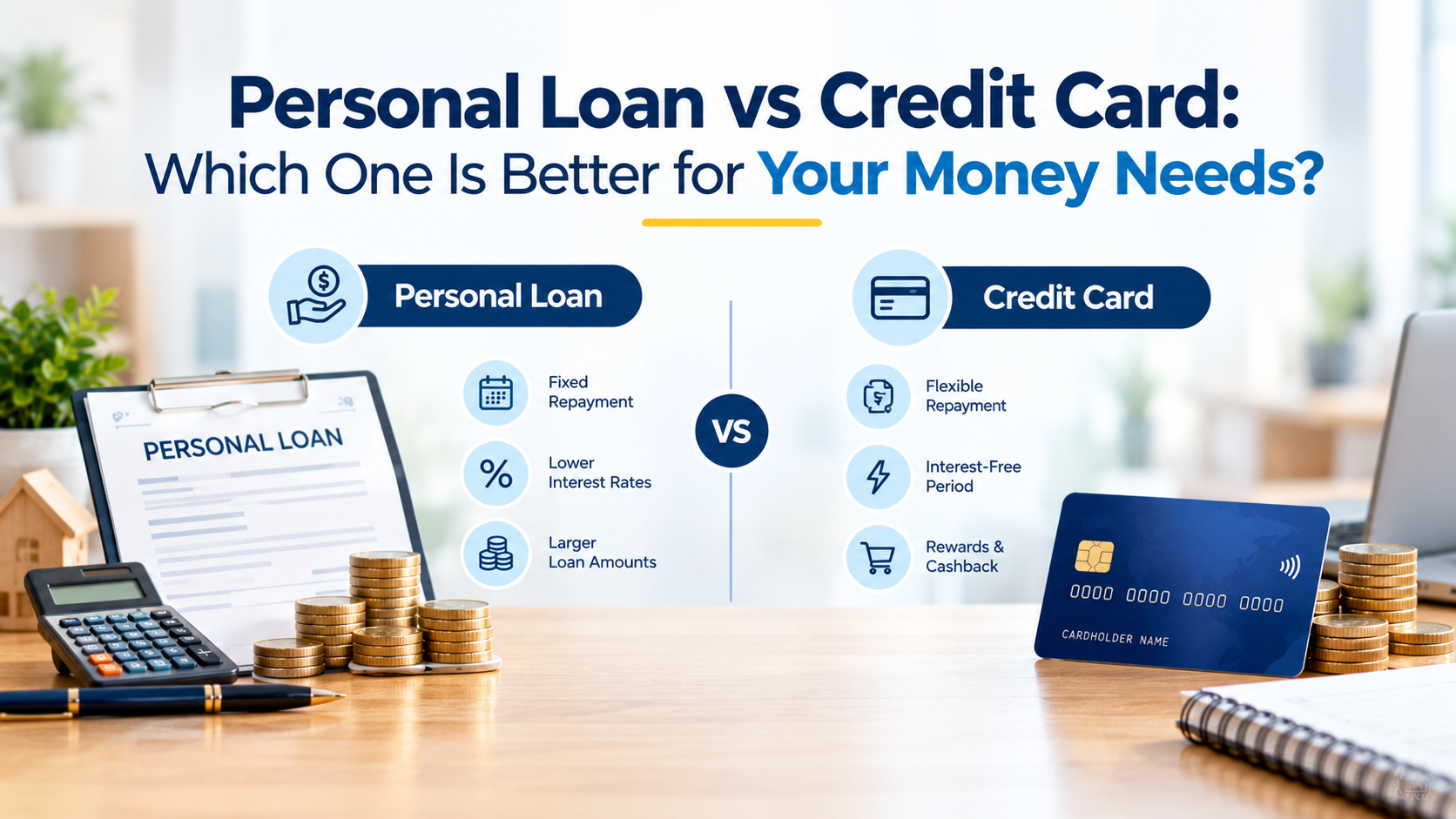
You need money, and you need it soon. Maybe it is a medical bill, a home repair, a wedding or a big purchase you cannot cover from savings. You have two options in front of you: swipe a credit card or apply for a personal loan. Both put money in your hands today. But they work very differently, and picking the wrong one can cost you hundreds or even thousands of dollars.
So which one is better? The honest answer is that it depends on how much you need, how fast you can repay and what you are buying. In this guide, we compare a personal loan vs a credit card in plain language. You will see how each one works, what each costs, where each one fits best and how to decide with confidence.
What Is a Personal Loan?
A personal loan is a lump sum of money that you borrow from a bank, credit union or online lender. You receive the full amount at once and repay it in equal monthly payments over a fixed period, usually one to seven years. This type of borrowing is called an installment loan.
Most personal loans are unsecured, which means you do not need to pledge anything like a car or a house. The lender decides based on your credit score, income and existing debts. Your interest rate is usually fixed, so your payment stays the same until the loan is cleared. That makes it easy to plan your budget.
Personal loans are often used for medical expenses, home improvement, weddings, education costs and combining several debts into one.
What Is a Credit Card?
A credit card gives you a spending limit that you can use again and again. You buy things, and the bank pays the shop on your behalf. At the end of the billing cycle, you get a statement showing what you owe. This is called revolving credit, because the limit refreshes as you repay.
If you pay the full balance by the due date, most cards charge no interest at all on purchases. If you carry a balance, interest is added, and credit card rates are usually much higher than personal loan rates. Cards also tend to offer rewards such as cashback, travel points and purchase protection.
A credit card is flexible and convenient. It is also easier to overspend with, because there is no fixed end date unless you create one yourself.
Personal Loan vs Credit Card: Key Differences
Before going deeper, here is a quick side by side look.
| Feature | Personal Loan | Credit Card |
|---|---|---|
| How you receive money | One lump sum | Spend as needed up to a limit |
| Type of credit | Installment | Revolving |
| Typical interest rate | Lower, often fixed | Higher, often variable |
| Repayment | Fixed monthly payments | Minimum payment or full balance |
| End date | Yes, set from day one | No fixed end date |
| Rewards | None | Cashback, points, perks |
| Best for | Large, planned expenses | Small, short term or everyday spending |
Keep this table in mind as we look at each point more closely.
Interest Rates and Total Cost
This is where the biggest gap appears. Personal loan rates depend on your credit profile, but they are usually well below credit card rates. Credit card interest is often charged at 20 percent a year or more, while a good borrower might get a personal loan at around 8 to 12 percent. The exact numbers vary by country, lender and your credit score.
Let us look at a simple example. Say you need $5,000 and you can afford to pay about $161 a month.
With a personal loan at 10 percent over three years, your monthly payment is about $161. You will be debt free in 36 months, and the total interest is roughly $808.
Now put the same $5,000 on a credit card charging 22 percent, and pay the same $161 each month. It would take about 47 months to clear it, and you would pay around $2,450 in interest. That is roughly three times more, and almost a year longer.
The lesson is clear. If you will need many months to repay, the lower rate of a personal loan can save you a lot of money.
When a Credit Card Costs Nothing
There is a flip side. If you can repay quickly, a credit card can be the cheaper choice. Most cards offer an interest free period between your purchase date and the due date. If you spend $1,000 and pay the whole bill on time, you pay zero interest.
Some cards also offer a promotional rate of 0 percent for several months on purchases or balance transfers. If you are disciplined and clear the balance before the offer ends, you borrow for free. Just read the terms carefully, because the rate can jump sharply once the promotional period is over.
Fees to Watch Out For
Both products can carry extra charges, so look beyond the interest rate.
Personal loans may come with an origination or processing fee, often 1 to 8 percent of the loan amount, taken from the money you receive. Some lenders also charge a penalty if you repay early, although many do not. Late payments usually bring a fee as well.
Credit cards can charge an annual fee, a late payment fee, a cash advance fee and a foreign transaction fee. Cash advances are especially costly, because interest often starts the same day with no grace period.
The best way to compare is to look at the APR, which includes the interest and many of the fees in one yearly figure. Always ask for it before you decide.
Effect on Your Credit Score
Both can help or hurt your credit score, depending on how you use them.
A personal loan adds an installment account to your credit mix. Paying it on time month after month builds a positive history. When you apply, there is a small, temporary dip from the hard inquiry.
A credit card affects something called credit utilization, which is the share of your limit that you are using. If you keep your balance below about 30 percent of your limit, your score benefits. If you max out the card, your score can drop quickly.
Here is a useful tip. Using a personal loan to pay off high balance credit cards can lower your utilization overnight and may improve your score. Just make sure you do not run the cards up again afterward.
Speed and Convenience
A credit card wins on speed. If you already have one, the money is available the moment you need it, with no application. There is no paperwork and no waiting.
A personal loan takes more effort. You apply, submit documents and wait for approval. Online lenders can be fast, sometimes funding in one to three business days, but it is still slower than tapping a card.
If you face a true emergency, such as a car repair you need today, a card may be the practical bridge. You can later move that balance to a lower cost loan if needed.
Discipline and Repayment Structure
This point is more about human behavior than numbers. A personal loan has a fixed schedule. You know exactly what you owe each month and when you will be finished. That structure forces progress.
A credit card is open ended. The minimum payment is usually small, often just 1 to 3 percent of the balance, so it feels easy to pay. But paying only the minimum can keep you in debt for years, because most of your payment goes to interest. If you know you tend to spend freely, a loan’s fixed plan may protect you from yourself.
When to Choose a Personal Loan
A personal loan is usually the better pick in these situations:
- You need a large amount, such as $3,000 or more
- You will take many months or years to repay
- You want a predictable payment and a clear end date
- You want to combine several high interest debts into one
- You value a lower interest rate over rewards
For example, imagine Maria has three credit cards with a combined balance of $8,000 at around 24 percent. She takes a personal loan at 11 percent and uses it to clear all three cards. Now she makes one payment each month, pays less interest and has a firm payoff date. That is debt consolidation working as it should.
When to Choose a Credit Card
A credit card is usually the better pick when:
- The expense is small and you can repay within a month or two
- You want rewards, cashback or purchase protection
- You qualify for a 0 percent introductory offer and can clear the balance in time
- You need money immediately and have no time to apply for a loan
- You pay the full balance every month
For example, David needs a $900 laptop. He buys it with a card that gives 2 percent cashback and pays the full bill when the statement arrives. He earns $18 back and pays no interest. For him, the card is the smarter tool.
Common Mistakes to Avoid
Many people make the same errors. One is paying only the minimum on a card and watching the balance barely move. Another is choosing a loan with a long term just to get a tiny payment, which raises total interest. Some people also forget about origination fees and then wonder why the money they received is less than the loan amount.
Another mistake is taking a loan to pay off cards and then spending on the cards again. That leaves you with the loan and new card debt.
How to Decide: A Simple Checklist
Ask yourself these questions before you borrow:
- How much do I need, and is it above my card limit?
- How long will I need to repay it?
- Can I clear the full amount within the interest free period?
- What is the APR on each option, including fees?
- Will a fixed payment help me stay on track?
- Am I using this to consolidate existing debt?
If you need a large sum, plan to repay slowly and want a fixed schedule, lean towards a personal loan. If the amount is small, you can repay fast and you want rewards, lean towards a credit card. When it is close, compare the real numbers using each lender’s calculator. If you are still unsure, a qualified financial adviser can look at your full picture.
Conclusion
The debate of personal loan vs credit card has no single winner. A personal loan gives you a lower interest rate, a higher borrowing limit and a clear path to becoming debt free, which makes it ideal for large or long term needs. A credit card gives you flexibility, speed and rewards, which makes it ideal for small purchases that you repay quickly.
The real danger is not choosing one over the other. It is carrying a high interest balance for too long without a plan. Whichever you pick, read the terms, check the APR, and borrow only what you can comfortably repay. Take ten minutes today to compare the actual rates available to you, and share this guide with a friend who is about to borrow. A smart choice now can save you a surprising amount of money later.