
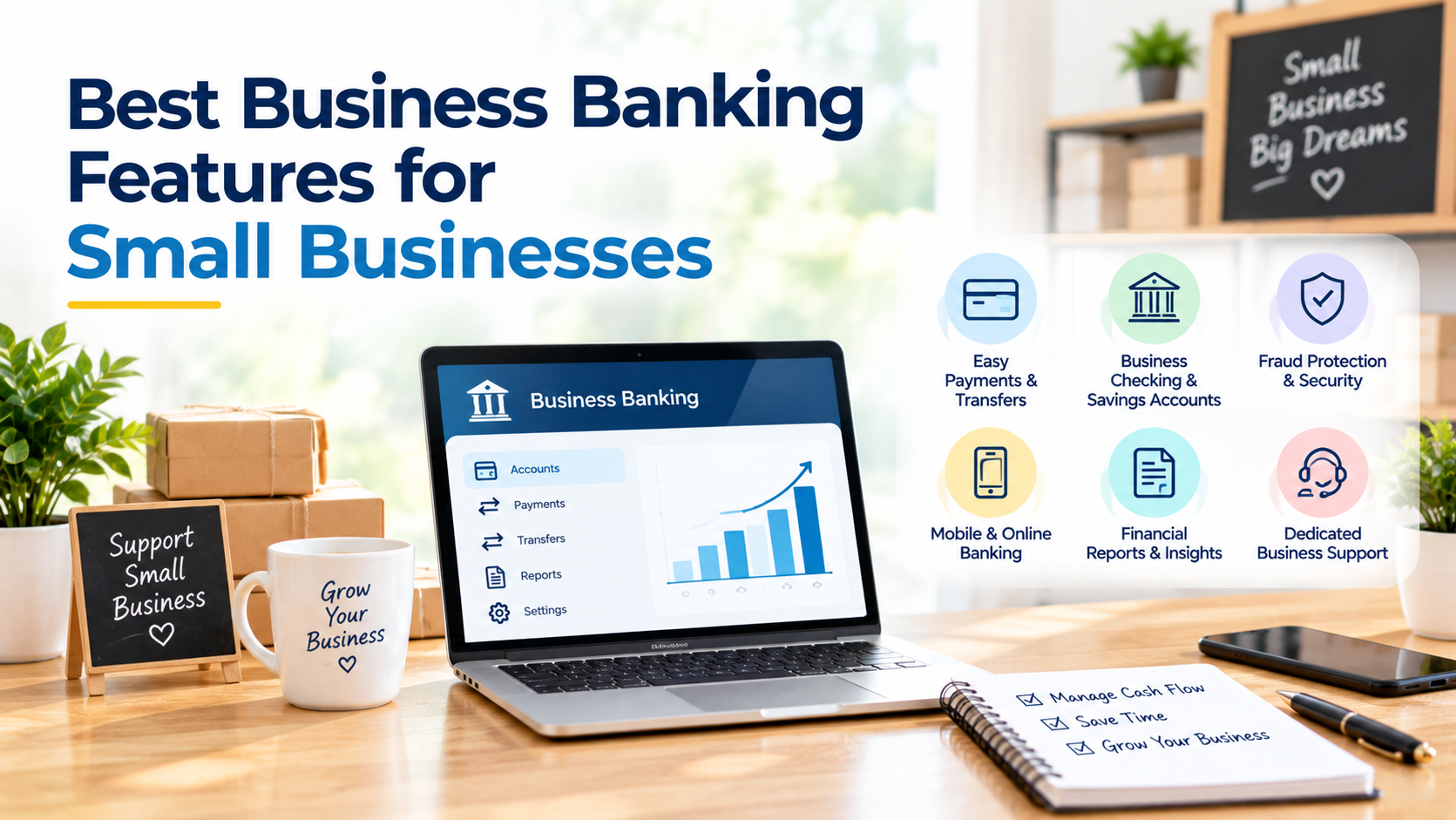
A lot of business owners, especially first-timers, assume a business account works more or less like their personal one, just with a different label on it. It doesn’t, not really. Business banking needs to handle higher transaction volumes, multiple people accessing the same account, integration with accounting software, and often a completely different risk and compliance profile. A personal account that charges you nothing for ten transactions a month isn’t built for a business doing five hundred.
This is exactly why the features worth prioritizing look different too. You’re not just asking “does this account pay decent interest,” you’re asking whether it can keep up with how your business actually operates day to day. Let’s get into the features that genuinely move the needle.
1. Zero or Low Transaction Fees at Volume
Here’s a trap a lot of small businesses fall into: they pick an account that looks cheap on paper, maybe zero monthly fee, attractive marketing, all the right buzzwords, and then get hit with per-transaction charges once their volume picks up. If you’re invoicing dozens of clients a month, running regular vendor payments, or processing customer transactions daily, those per-transaction fees add up fast, sometimes faster than a flat monthly fee would have cost you in the first place.
What you actually want is a bank that’s upfront about transaction limits and what happens once you cross them. Some business accounts offer a generous number of free transactions per month before fees kick in, while others charge a flat rate regardless of volume, which can actually work out cheaper if you’re doing high-frequency, low-value transactions. Run the math based on your actual transaction patterns, not the bank’s headline offer, before committing.
2. Multi-User Access With Real Permission Controls
This one trips up more businesses than you’d expect. As your team grows, you’re not the only person who needs to touch the bank account. Maybe your co-founder needs to approve payments, your accountant needs read-only access to reconcile books, or your office manager needs to handle routine vendor payments without being able to move large sums on their own.
A good business account lets you add multiple users with genuinely different permission levels, not just a shared login that everyone uses with the same god-mode access, which is honestly a security nightmare waiting to happen. Look for accounts that let you set spending limits per user, require dual approval above certain thresholds, and give you a clear audit trail of who did what and when. If something goes wrong, and eventually something always does, you want to know exactly where to look.
3. Seamless Integration With Accounting Software
If you’re still manually entering transactions into a spreadsheet or your accounting tool at the end of every month, you’re burning hours you don’t have. A business account that integrates directly with accounting platforms, automatically syncing transactions, categorizing expenses, and reconciling against invoices, saves a genuinely surprising amount of time once you add it up over a year.
This matters even more if you work with an external accountant or a bookkeeping service, since clean, synced data means less back-and-forth, fewer errors, and a much smoother tax season. Before opening an account, check whether it plays nicely with whatever accounting software you already use, or plan to use, because retrofitting this later is far more painful than setting it up right from day one.
4. Built-In Invoicing and Payment Collection Tools
A growing number of business banks now bundle invoicing directly into their platform, letting you generate and send invoices, track which ones are paid or overdue, and collect payments through multiple methods, all without bouncing between three different tools. If you’re currently using a separate invoicing app that doesn’t talk to your bank account, you already know the friction this creates: manually matching payments to invoices, chasing clients, and losing track of who actually paid you.
This feature matters more the smaller your team is, since solo founders and small teams rarely have the bandwidth to manage multiple disconnected systems. One place to send invoices, track payments, and see your cash position gives you a much clearer, faster read on where your business actually stands financially, instead of piecing it together from five different screens.
5. A Business Debit or Credit Card With Useful Controls
Your business card shouldn’t just be a payment method, it should be a management tool. Look for cards that let you issue multiple cards to team members with individual spending limits, freeze or cancel a specific card instantly if it’s lost or compromised, and get real-time notifications on every transaction so you’re never surprised by a charge.
Some banks also offer cashback or rewards specifically structured around common business expenses, things like software subscriptions, advertising spend, or fuel, which can add up to a meaningful amount over a year if your spending patterns align well with what’s being rewarded. It’s not the deciding factor on its own, but it’s a nice bonus worth factoring in when two options are otherwise close.
6. Access to a Business Credit Line or Overdraft Facility
Cash flow gaps are just part of running a business, even a healthy, profitable one. A client pays late, inventory needs to be bought before revenue comes in, or a seasonal dip means expenses outpace income for a month or two. Having access to a pre-approved credit line or overdraft facility tied to your business account means you can smooth over these gaps without scrambling for emergency financing at the worst possible moment.
The key word here is pre-approved. Setting this up before you actually need it, while your business is in a stable position and can qualify more easily, puts you in a far better spot than trying to arrange financing during an actual cash crunch, when lenders are naturally more cautious and terms tend to be worse.
7. A Mobile App That Doesn’t Make You Want to Throw Your Phone
This sounds like a small thing until you’re trying to approve a payment from your phone while standing in a supplier’s warehouse with spotty signal, and the app decides that’s the moment to freeze. A genuinely good business banking app should let you check balances, approve transactions, deposit cheques, transfer funds, and manage cards without feeling like you’re fighting the interface every step of the way.
Read recent reviews specifically from business users, not just general ratings, since a bank’s personal banking app being decent doesn’t guarantee their business app is built with the same care. Business users have different needs, and some banks clearly put far more development effort into one than the other.
8. Dedicated Business Support, Not a Generic Call Center Queue
When something goes wrong with your business account, and it will eventually, you don’t want to be stuck explaining your entire situation to a generalist support agent reading from a script meant for personal banking customers. Look for banks that offer a dedicated business banking support line, ideally with agents who actually understand things like payroll processing, bulk payments, and business-specific compliance requirements.
Some banks also assign a relationship manager once your account reaches a certain size or transaction volume, which can be genuinely valuable when you need something resolved quickly or want proactive advice on better banking products as your business scales.
9. Transparent, Predictable Fee Structures
Nothing kills trust in a bank faster than discovering a fee you didn’t know existed, buried somewhere in a document you never fully read. The best business banking relationships are built on fee structures that are clear from day one: a defined monthly fee, clear transaction limits and what happens beyond them, explicit charges for things like wire transfers or foreign currency handling, and no surprise charges that only show up after you’ve already committed.
Before signing up, ask directly for a full breakdown of every fee that could apply to your typical usage pattern. If a bank is cagey about answering this clearly, take that as a signal, not a good one.
10. Scalability as Your Business Grows
The account that works perfectly for a two-person startup might become genuinely limiting once you’re running a team of twenty with international clients and higher transaction volumes. Before settling on a bank, it’s worth asking what the next tier of their business account looks like, and how smooth the transition is if you outgrow your current setup.
Switching banks entirely, once you’ve built up transaction history, integrations, and team habits around one platform, is a genuinely disruptive process. Choosing a bank that can scale with you, rather than one you’ll need to abandon in two years, saves you that headache down the line.
Red Flags to Watch Out For
A few things should make you pause before committing to a business account. Vague or evasive answers about fees when you ask directly are a bad sign, as is an account opening process that drags on for weeks without clear communication about what’s holding things up. Watch out for limited or no integration options with standard accounting software, since that alone can cost you hours every month in manual work. And if the mobile app has consistently poor reviews specifically from business users, take that seriously, since you’ll likely be relying on it daily.
How to Actually Choose: A Practical Approach
Don’t just compare feature lists side by side, since most banks will check similar boxes on paper. Instead, map out your actual business operations first. How many transactions do you process monthly, and what’s their typical size? How many people need account access, and what should each of them be able to do? What accounting software are you using or planning to use? Do you anticipate needing credit or overdraft access in the next year? Answering these honestly narrows your options far faster than scrolling through comparison charts, and it makes sure you’re picking a bank built around how your business actually runs, not how a generic small business is assumed to run.
Frequently Asked Questions
Do I really need a separate business bank account?
In most cases, yes. Keeping business and personal finances separate makes bookkeeping dramatically simpler, protects your personal assets depending on your business structure, and is often a requirement for registered businesses depending on your jurisdiction.
What’s the biggest mistake small businesses make when choosing a bank?
Picking based on a low advertised monthly fee without checking transaction limits, integration options, or multi-user access, then discovering the account can’t actually keep up once the business starts growing.
Should I prioritize a traditional bank or a digital-first business bank?
It depends on your needs. If you handle a lot of cash or need in-person support for larger transactions, a traditional bank’s branch network helps. If you’re mostly digital and want faster onboarding, better app experience, and often lower fees, a digital-first business bank tends to be the stronger fit.
Can I switch business banks later if my needs change?
Yes, though it takes planning. Moving automated payments, updating client-facing payment details, and migrating transaction history all take time, so it’s worth choosing a bank that can scale with you to avoid an unnecessary switch down the line.
Is a business credit line the same as a business loan?
Not quite. A credit line is a flexible, revolving facility you can draw from and repay as needed, mainly for smoothing cash flow gaps, while a business loan is typically a lump sum disbursed upfront for a specific purpose, repaid over a fixed schedule.
Final Thoughts
Choosing business banking isn’t about finding the bank with the flashiest app or the longest feature list, it’s about finding one that fits how your business actually operates, today and as it grows. Transaction volume, team access needs, accounting integration, and transparent fees matter far more in daily practice than any single flashy feature a bank might lead with in their marketing. Take the time to map your actual needs before comparing options, and you’ll end up with a banking setup that quietly supports your business instead of constantly getting in its way.